
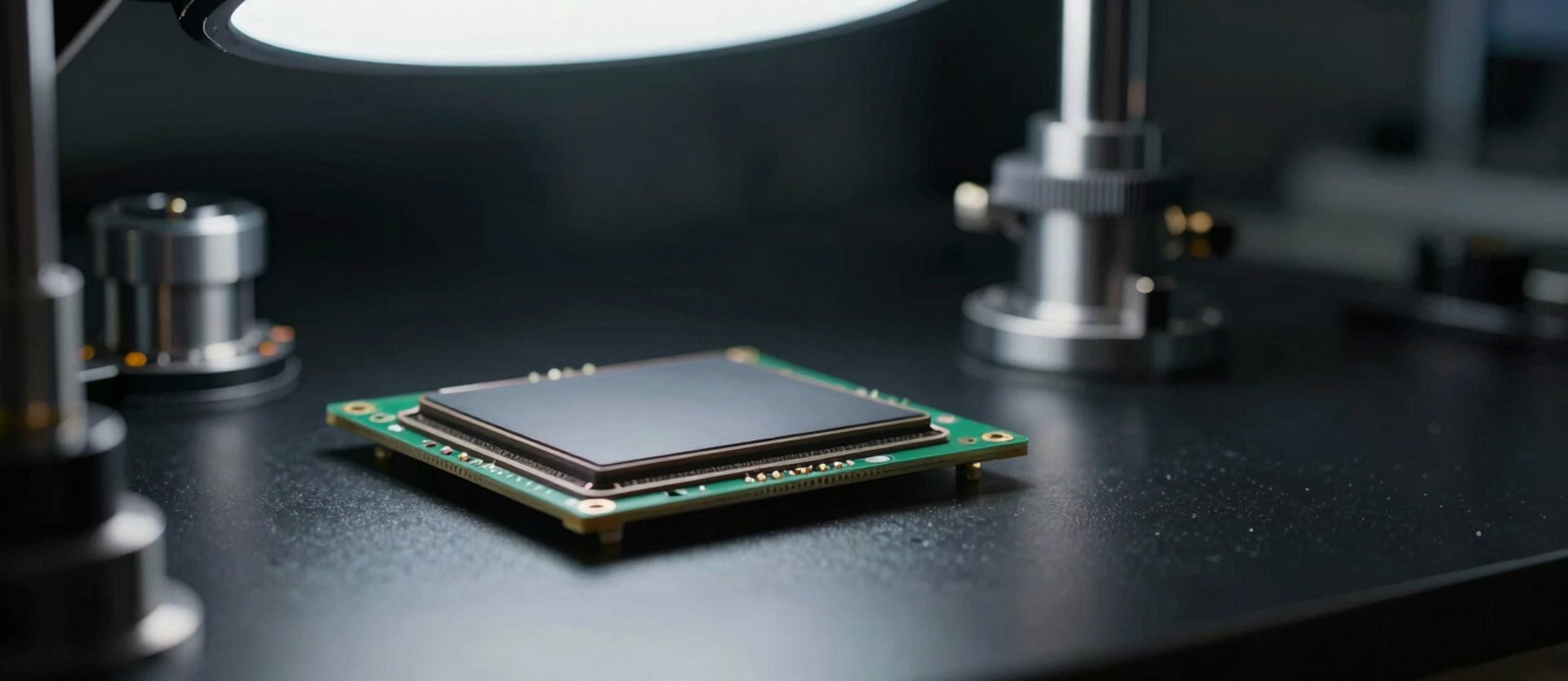
— Optical Platform Architecture

Light measures glucose. Enzymes don't.

GluTronics reads blood glucose via near-infrared optical spectroscopy — directly, in real time, with no interstitial fluid intermediary and no consumable sensor to replace.
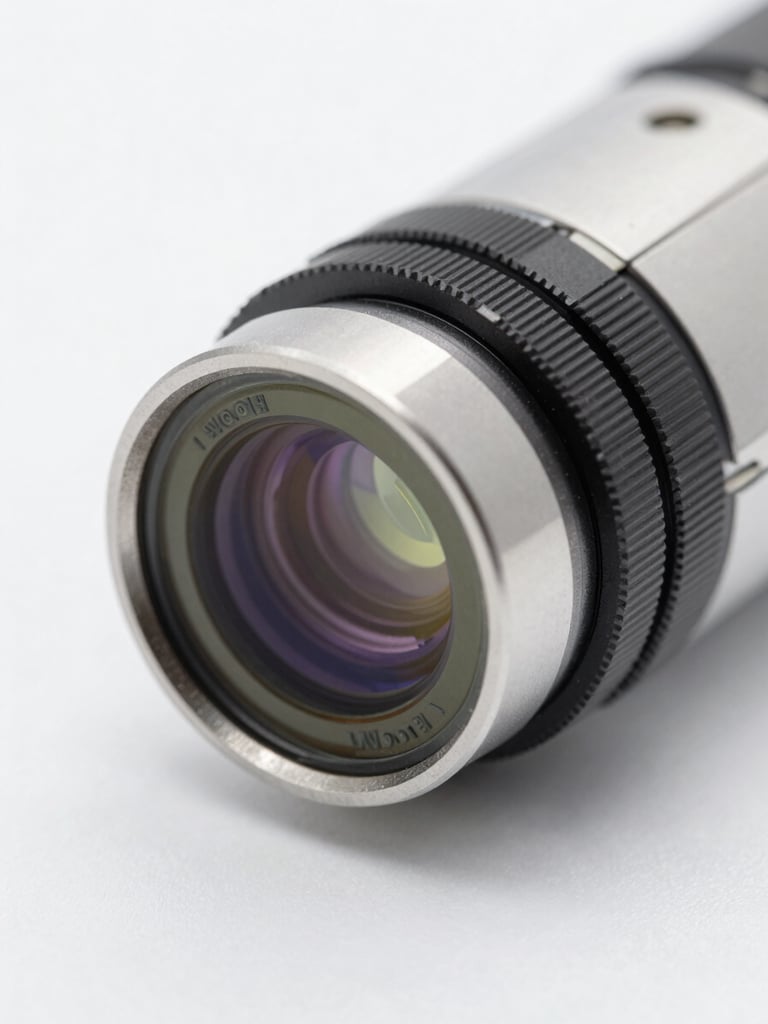
Extreme macro close-up of a miniaturized optical sensor emitter array, angled product detail shot revealing the layered optical stack and wavelength-selective apertures, high-key shadowless lab lighting on a clean white clinical surface, no background clutter
/ How It Works

Spectroscopy, not biochemical inference

The sensor emits calibrated near-infrared wavelengths through tissue. Glucose concentration is derived from the absorption signature of whole blood — no enzymatic reaction, no electrochemical oxidation step.

Because measurement occurs in the capillary bed, not the interstitial fluid compartment, the 5–15 minute physiological delay endemic to enzymatic CGM systems is structurally absent from this architecture.
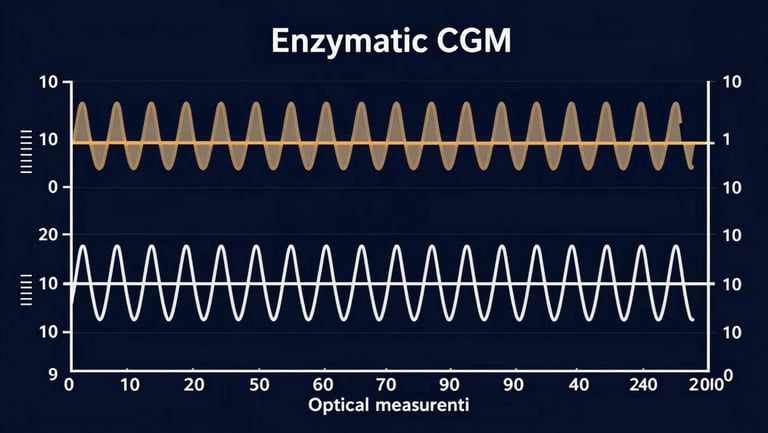
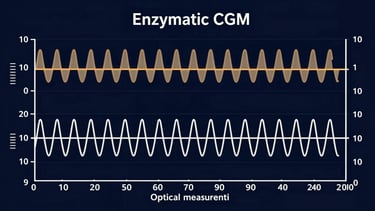
Wide overhead technical diagram on a deep navy background showing two parallel glucose time-series traces — one labeled enzymatic CGM with a visible 10-minute lag offset shaded in a muted amber zone, one labeled optical direct measurement tracking a reference line precisely — clinical chart aesthetics, no patient imagery, white axis labels, stark high-contrast presentation
▸ ISF Lag Elimination

The 15-minute problem, removed by design

Enzymatic sensors read interstitial fluid — a compartment that lags whole-blood glucose by 5 to 15 minutes. Every clinical decision built on that data inherits that error.

Optical spectroscopy captures the blood signal directly. Zero ISF compartment. Zero diffusion delay. Readings reflect physiological state as it exists, not as it existed.
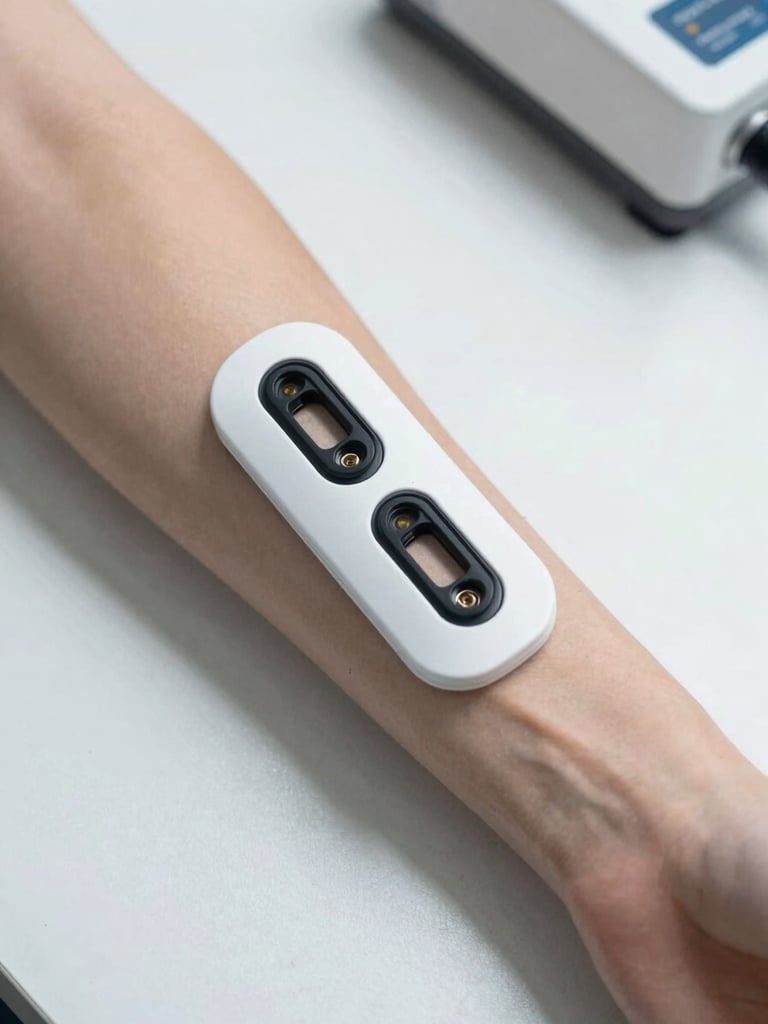
Overhead clinical lab shot of a wearable optical sensor positioned on a forearm against a clean white testing surface, high-key shadowless lighting, precision electrode contacts and optical apertures visible in sharp detail, no patient face visible, no lifestyle context
+ Fitzpatrick-Scale Validation

Accuracy validated across all six skin tones

Legacy optical systems degrade in accuracy at higher melanin concentrations. GluTronics' multi-wavelength calibration algorithm was developed and validated across the full Fitzpatrick I–VI range under IRB-approved protocols.

Skin-tone agnostic performance is not a secondary specification — it is a clinical accuracy requirement built into the optical stack from the ground up.